
Table of Contents
ToggleGenshin Impact’s divine pantheon isn’t just window dressing, it’s the backbone of Teyvat’s story and gameplay depth. Whether you’re chasing the next Archon pull or trying to understand why the Electro Archon matters beyond her jaw-dropping design, grasping the role of gods in Genshin Impact transforms how you engage with the game. These celestial beings aren’t simply powerful characters to collect: they’re the drivers of major plot arcs, the sources of elemental power, and increasingly, they’re dominating the meta in team compositions. This guide breaks down everything from the Seven Archons to the shadowy forces lurking behind the scenes, so you’ll know exactly what you’re dealing with when the next divine entity enters your roster.
Key Takeaways
- Genshin Impact gods, including the Seven Archons and celestial entities, are core to both the game’s narrative and meta gameplay, with each Archon representing unique elemental principles and mechanical functions.
- The five playable Archons each serve distinct team roles: Venti excels at crowd control, Zhongli provides unmatched survivability, Raiden Shogun offers hybrid DPS-support, Nahida enables Dendro reactions, and Furina amplifies team damage through support.
- Understanding divine lore reveals that Archons operate under cosmic constraints imposed by Celestia and the Heavenly Principles, adding emotional depth to their characters and story conflicts.
- Artifact sets like Emblem of Severed Fate and weapons tailored to specific gods significantly maximize Archon performance, making strategic investment more important than raw stat power.
- The game’s trajectory toward divine conflict mechanics suggests future content will reward players who understand Archon synergies and celestial allegiances as core competitive advantages beyond traditional power scaling.
What Are Gods in Genshin Impact?
In Genshin Impact, gods aren’t just high-level NPCs, they’re a specific tier of being with cosmological significance. The term encompasses Archons (the Seven rulers of each nation), the Unknown God who seals the Traveler at the start, and various other celestial entities that predate human civilization on Teyvat.
Archons are the primary “gods” you’ll encounter. Each nation has one, and they represent not just military or magical superiority but the very principles their region embodies. Barbatos represents freedom, Morax represents contracts and stone, Baal represents eternity, you get the idea. They’re literal manifestations of their domains.
What makes this distinction important for gameplay is that Archon characters often come with unique mechanics tied to their divine nature. They typically offer both powerful personal stats and team-wide buffs rooted in their elemental archetype. When HoYoverse releases an Archon character banner, it’s not just hype, it’s usually a meta-shaping event.
The celestial hierarchy goes deeper, though. Above the Seven Archons sit even more ancient powers: Celestia, the Heavenly Principles, and the entities that existed before Teyvat itself took its current form. Some of these may never become playable characters, but understanding them explains motivations behind major story beats and enemy designs.
The Seven Archons: Rulers of Teyvat
Barbatos and the Anemo Archon
Barbatos, the Anemo Archon, is literally the mascot of Mondstadt and the god of freedom. In-game, he manifests as Venti, the cheerful bard who’s been a meta-defining support since launch. Venti’s Elemental Burst (Wind’s Grand Ode) pulls enemies together and applies Anemo, making him essential for crowd control and Anemo-focused teams. His Constellation 6 version is notoriously powerful, letting him extend his Burst duration, C6 Venti in a Freeze comp is nearly unmatched even in 2026.
What makes Venti special beyond damage is his accessibility. Unlike other Archons, he’s been rerun multiple times, making him easier to pull compared to newer gods. His off-field Anemo damage, crowd control, and energy generation make him a backbone unit for vertical and horizontal spiral abyss clears. If you don’t have Venti, Kazuha or Nahida can substitute, but the god of wind himself remains the gold standard.
Morax and the Geo Archon
Morax, the Geo Archon, embodies contracts and stone. He manifests as Zhongli, the tall, mysterious gentleman who serves as Liyue’s Adeptus. Zhongli’s Jade Shield provides the strongest shield in the game, full stop. With proper investment and artifacts, a well-built Zhongli can make you immortal for extended periods, making him the ultimate comfort pick for endgame content and challenging domains.
Zhongli’s role shifted meta-wise after his second rerun. Initial players considered him underwhelming compared to other five-stars, but constant buff discussions and meta evolution proved him essential. His shield strength and universal RES shred make him a universal support that works in literally any team composition. Pairing Zhongli with DPS units means you can run offensive artifact sets instead of defensive ones, multiplying your overall damage output.
His Geo application also triggers crystallize shields with other elements, though these are usually negligible compared to his Jade Shield alone. The real value is the space he creates for optimization: you can build aggressive, glass-cannon DPS units because Zhongli makes them unkillable.
Baal and the Electro Archon
Raiden Shogun (Baal, the Electro Archon) represents eternity and rules Inazuma. She’s one of the most powerful characters ever released and shifted Electro’s role in team composition. Her Resolve mechanic, stacking based on team energy costs, ties her personal damage directly to team building, making her reward preparation and planning.
Her Elemental Burst (Secret Art: Musou Isshin) grants massive damage multipliers on normal attacks and applies Electro off-field. This makes her function as both main DPS and support depending on team needs. In Aggravate teams with Fischl and Dendro applicators, Raiden Shogun becomes a sustained damage monster. In National variants, she batteries the team while dealing damage.
As of 2026, Raiden Shogun remains top-tier even though multiple character releases. Her versatility, ease of use, and damage scaling make her a universal upgrade for any Electro-heavy roster. If you’re debating between two Archon reruns, Raiden often wins for impact on clear times.
Kusanali and the Dendro Archon
Lesser Lord Kusanali, the Dendro Archon, represents wisdom and nature. She manifests as Nahida, the small, quirky god-child who rules Sumeru with more whimsy than typical divine authority. Nahida’s Elemental Skill (All Schemes to Know) applies Dendro off-field and benefits from Elemental Mastery, making her the perfect enabler for Dendro reaction teams.
Her release fundamentally reshaped the Dendro meta. Before Nahida, Dendro teams struggled with application consistency. She solved this with a single character, becoming mandatory for most Dendro comps. Bloom teams with Nahida + Hydro applicator + two flexes became one of the strongest archetypes in the spiral abyss.
Nahida’s artifacts and stat priorities differ from other Archons, she craves Elemental Mastery over raw ATK, which makes her a unique build puzzle. Her role as an off-field applicator and buffer means she’s never your main DPS, but she’s indispensable in teams that lean on Dendro reactions. As of early 2026, she remains essential for any competitive abyss team running Dendro or reaction-heavy comps.
Focalors and the Hydro Archon
Focalors, the Hydro Archon, represents justice and rules Fontaine from behind the scenes. She manifests as Furina, a character who underwent significant balance changes after her release. Initially, Furina functioned as a pure Hydro applicator with modest support capabilities. Post-2.1 adjustments made her one of the strongest supports in the game, dramatically increasing her effectiveness in Vaporize and Freeze teams.
Furina’s true strength lies in her Elemental Burst (Noblesse Oblige knockoff, but better), which heals and provides massive ATK buffs to the team. When properly rotated, she enables Vaporize DPS units to reach absurd damage numbers. Her Hydro application also triggers Freeze consistently when paired with Cryo applicators.
As of 2026, Furina is competing with Zhongli for the title of universal best support. While Zhongli excels at survivability, Furina excels at damage amplification. The choice between them depends on team needs: if you need security, pick Zhongli: if you want maximum DPS, pick Furina. Most endgame players own both.
Furina’s importance extends beyond mechanics, she’s thematically crucial to Fontaine’s story arc and ties together the lore of previous nations. Understanding her role as Archon enhances appreciation for the game’s narrative depth.
Divine Beings Beyond the Seven Archons
The Unknown God and Celestial Powers
The opening cinematic of Genshin Impact features the Unknown God, a mysterious entity who seals one of the Traveler’s sibling and strips their power. This being isn’t an Archon but something older and more powerful, a direct agent of Celestia, the celestial kingdom floating above Teyvat.
The Heavenly Principles, which the Unknown God serves, represent the fundamental laws governing Teyvat’s world. They’re not “good” or “evil”, they’re abstract cosmic forces that maintain reality itself. Every major conflict in the game (the Cataclysm, the Abyss Order, current Archon wars) stems from resistance to or misunderstanding of these Principles.
As of 2026, no playable character directly represents Celestia or the Unknown God. But, leaked and speculative content suggests future divine beings, possibly the goddesses of earlier ages or more direct Celestial servants, may eventually become playable. This is pure speculation, but the narrative threads suggest it’s inevitable.
For gameplay purposes, understanding celestial hierarchy explains boss mechanics and story encounters. Celestial Abyss floors increasingly feature enemies and bosses that directly challenge Celestial authority, hinting at future plot developments.
Former Gods and Fallen Deities
Teyvat wasn’t always ruled by the current Seven. Historical lore reveals older gods who lost their thrones during previous eras, particularly around the Cataclysm roughly 500 years before the game’s present.
Decarabian, the god of storms, once ruled Mondstadt but was overthrown. Remnants of his power appear in the dungeon Stormterror’s Lair, where the dragon Dvalin, corrupted by the Abyss, serves as both enemy and eventual ally. Learning Decarabian’s story explains why Mondstadt’s archon changed and why some ancient ruins hold Cryo properties even though Anemo domination.
Other fallen gods exist in fragments and legends. The Byakuya Shogun in Inazuma’s story implies previous divine hierarchies that were replaced during Raiden Shogun’s era. These aren’t playable characters but understanding them enriches lore engagement and explains why certain domains or boss fights have specific thematic elements.
The significance of fallen gods is that they hint at instability in Teyvat’s divine structure. If gods can fall, and newer gods can rise, what prevents current Archons from toppling? This narrative tension drives speculation about endgame story direction. It also suggests that future characters might be “demigods” or divine beings in decline, think less “all-powerful celestial” and more “formerly divine, now struggling to maintain power.”
How to Use Gods in Gameplay and Team Building
Archon Characters as DPS and Support
Not all Archons function the same way. Understanding their role in your comp is crucial for effective building.
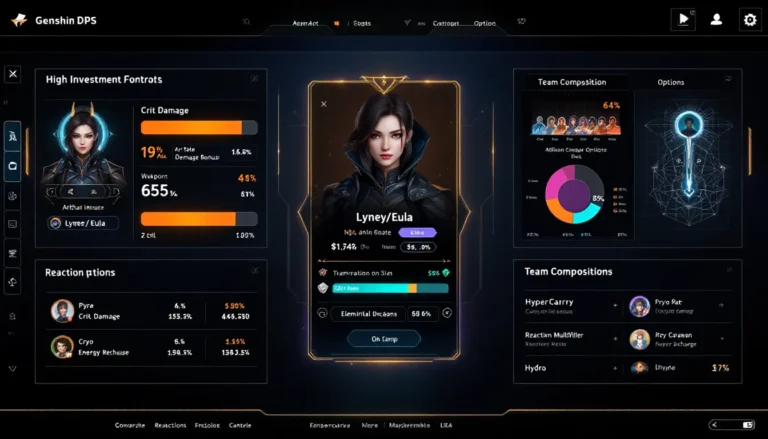
Venti and Nahida are purely off-field supports. They apply elements, provide damage boosts, and control the battlefield but aren’t your main damage dealers. Builds prioritize Elemental Mastery, Energy Recharge, and Crit Damage for sub-DPS application.
Raiden Shogun and Furina are hybrid characters. They can function as either main DPS or support depending on team needs. Raiden does well with ATK% and Crit stats when used as primary damage, while also benefiting from Energy Recharge even when supporting. Furina scales harder with healing bonus and Crit when you stack her support benefits.
Zhongli is a pure support but with unique mechanics. He doesn’t need Crit or Elemental Mastery, pure HP% and Crit Rate (for his personal damage ticks) are optimal. A well-built Zhongli typically runs: HP/HP/Crit Rate with 4pc Tenacity of the Millelith artifact set for universal team ATK buff.
When assembling teams around these Archons, synergy matters. Venti works best with off-field Cryo/Hydro applicators for Freeze or Aggravate comps. Nahida demands at least one additional Dendro applicator for true Bloom potential. Raiden benefits from high-energy-cost teammates like Xingqiu or Yelan. Furina wants heavy Hydro application for maximum Vaporize value.
The best Genshin Impact characters often include Archons because their base kit quality is simply higher than regular five-stars. But, raw kit doesn’t always translate to best team performance, synergy and rotation timing matter more.
Synergies With Divine-Themed Artifacts and Weapons
Teyvat has introduced artifact sets and weapons specifically designed for Archon playstyles. Understanding these options maximizes Archon potential.
Noblesse Oblige (four-star artifact set) benefits any support Archon by boosting Burst damage and providing team-wide ATK%. It’s perfect for Venti support rotations or Furina when you’re prioritizing her Burst buff phase.
Emblem of Severed Fate revolutionized Archon building by scaling Burst damage directly off Energy Recharge. Characters like Raiden Shogun, Nahida, and anyone running high ER benefit massively. This single artifact set made many previously weak characters viable by letting them scale two primary stats (ER + their damage stat) simultaneously.
Weapon-wise, Engulfing Lightning for Raiden, A Thousand Floating Dreams for Nahida, and Vortex Vanquisher for Zhongli are signature weapons that define their performance ceilings. But, craftable alternatives exist: The Catch works for Raiden, Mappa Mare or Sacrificial Fragments for Nahida, and Black Tassel for Zhongli. These free-to-play options rival five-star weapons when properly utilized.
Spiral Abyss blessing cycles occasionally feature “Archon buffs”, specific elements or mechanics that reward using god characters. Keeping diverse Archon investments helps you adapt to blessing rotations quickly. Genshin Impact Lyney and Genshin Impact Shenhe represent newer additions to the divine roster with unique synergies, Lyney as a powerful Hydro DPS and Shenhe as a Cryo support that redefines Freeze teams.
Lore and Mythology: Understanding Teyvat’s Divine Hierarchy
The Celestia and Heavenly Principles
Celestia is more concept than location. It’s the realm above Teyvat where the Heavenly Principles govern, and it exists in a state separate from normal spacetime. The Unknown God serves these Principles, enforcing laws that prevent Teyvat’s inhabitants from ascending beyond their destined stations.
This creates a core tension: the Archons themselves tried to ascend before settling into their roles. Barbatos couldn’t achieve full godhood naturally, so he negotiated a contract with Celestia. Morax accepted the burden of rulership specifically to maintain a civilization that could eventually ascend. Raiden Shogun’s entire conflict stems from trying to achieve “eternity”, a state where change ceases and transcendence becomes possible.
Understanding this context makes Archon characters feel less like random powerful NPCs and more like tragic figures. Each god has compromised with cosmic law to maintain their nation. This makes story archon fights (especially Raiden and Furina’s) emotionally resonant.
As of 2026, the Heavenly Principles remain mysterious. Recent patches hint at deeper lore about what they actually want and whether they’re truly “good.” The Abyss Order explicitly opposes them, suggesting even cosmic systems have moral ambiguity. This sets up potential future story arcs where players might side against celestial authority, a revolutionary narrative move for an open-world gacha game.
Conflicts Between Gods and Impact on World Events
The Cataclysm wasn’t random disaster, it was divine conflict. Two opposing god-level forces clashed roughly 500 years before the game’s timeline, destroying the previous civilization and reshaping Teyvat’s geography.
Current Archon-focused events reveal ongoing divine tensions. Inazuma’s civil war in Kazuha’s backstory stems from Raiden Shogun’s absolute authority conflicting with regional independence. Sumeru’s story arc centers on Nahida’s struggle against the Fatui (an organization serving potentially older cosmic interests) trying to manipulate Dendro power.
Fontaine’s story directly tackles whether Archons serve their people or celestial interests. Furina discovers her role wasn’t to govern but to feed suffering-induced energy to Celestia, a revelation that her entire divine mandate was exploitation. This fundamentally changes how players view Archon authority.
These conflicts matter beyond narrative satisfaction. Enemy types, domain mechanics, and boss patterns reflect divine battles. Game8 and similar tier list sites regularly update based on new divine lore revealing which characters counter specific celestial threats.
The broader pattern: the game is building toward a conflict where mortal characters must navigate between competing god-level factions. This suggests future story arcs will be less “defeat the Archon” and more “which cosmic force do you support?”
Future Gods and Archons to Expect
As of early 2026, five of the Seven Archons have appeared as playable characters. The missing Archons are Tsaritsa (Cryo) and potentially an unknown god from regions not yet released. Leaks and community speculation suggest both will eventually become playable, though HoYoverse guards this information fiercely.
Tsaritsa, the Cryo Archon, rules Snezhnaya but hasn’t appeared in-game beyond story mentions. Rumors suggest she might not be “pure evil” even though leading the Fatui, another instance of Teyvat’s moral complexity. Her release would likely redefine Cryo and Freeze viability depending on her kit.
Beyond the remaining Archons, newer regions may introduce regional gods that function similarly but outside the formal Seven structure. The recent addition of Genshin Impact Sigewinne as a Fontaine character hinted that divine beings don’t require Archon status, powerful supporting deities populate Teyvat.
Speculation also centers on whether we’ll meet ascending demigods or half-divine characters. Some leaked designs suggest future characters with partial celestial heritage who struggle with their dual nature. This would expand the “god” category beyond pure Archons to something more nuanced.
From a meta perspective, future divine characters will likely continue the pattern established by recent releases: unique mechanics that reward learning and team synergy over raw stat power. As the game evolves, divine beings increasingly serve as skill-testing units where optimization matters more than gear investment.
The broader trajectory suggests HoYoverse is building toward endgame content that explicitly requires understanding divine mechanics and lore. Knowing which gods oppose which Celestial factions might become mechanically relevant, imagine Spiral Abyss floors designed around divine allegiance bonuses. Understanding Genshin Impact characters male options for future divine teams and Genshin Impact Eula as a non-divine powerhouse becomes strategically important as meta shifts.
Conclusion
Genshin Impact’s divine pantheon transforms from surface-level lore into mechanical and strategic depth. The Seven Archons aren’t interchangeable, Venti’s crowd control fundamentally differs from Zhongli’s invincibility or Raiden Shogun’s damage scaling. Similarly, understanding divine lore adds narrative texture that separates casual engagement from true appreciation.
The game’s trajectory suggests celestial conflict will intensify. Future Archon releases, divine character mechanics, and lore revelations point toward systems where players must navigate complex relationships between competing gods. This stands apart from typical gacha power creep cycles, it’s the emergence of strategic layers beyond just pulling five-stars.
Whether you’re optimizing Abyss clears, pursuing ultimate character collection, or chasing narrative completion, comprehending Teyvat’s gods provides both mechanical advantage and story resonance. The best approach combines smart team building (leveraging Archon synergies), artifact optimization (understanding unique stat priorities), and story engagement (knowing why each god matters). Start by securing accessible Archons like Venti or Zhongli if available, build your artifacts strategically, and gradually expand understanding of how divine mechanics interact with your roster. The realm of Teyvat becomes dramatically richer when you recognize its gods as more than high-tier collectibles, they’re the forces literally shaping reality.