




Table of Contents
ToggleGenshin Impact’s economy can feel overwhelming at first glance. Between Primogems, Mora, Genesis Crystals, and event-specific tokens, new players often burn through resources without understanding what they’re actually spending. The difference between a smart spender and someone who wastes currency on low-value pulls or inefficient upgrades comes down to one thing: knowledge. This guide breaks down Genshin Impact’s currency system in 2026, showing players exactly how to earn, spend, and optimize every resource at their disposal, whether they’re F2P (free-to-play) or willing to invest.
Key Takeaways
- Genshin Impact currency is divided into Primogems (premium), Genesis Crystals (real-money only), Mora (in-game), and event tokens, each requiring different earning and spending strategies.
- Free-to-play players can earn 8,000–10,000 Primogems per patch by completing daily commissions, Spiral Abyss, events, and exploration, making Welkin Moon ($5/month) the best value investment for light spenders.
- Mora farming via Ley Lines is less Resin-efficient than material domains; prioritize domain farming for ascension materials and claim event Mora bonuses to build character reserves.
- Event currencies expire at patch end and should be spent immediately on new character ascension materials or Primogems when available, as leaving tokens unused wastes free rewards.
- Plan Primogem pulls 2–3 patches ahead targeting specific characters, hit soft pity at ~75 pulls when possible, and avoid weapon banners unless whaling, as characters provide better long-term value.
Understanding Genshin Impact’s Currency System
Genshin Impact doesn’t use a single currency, it uses several, each with different purposes and earning methods. Understanding the distinction is critical because some currencies are farmable, others are limited, and some are tied directly to real money.
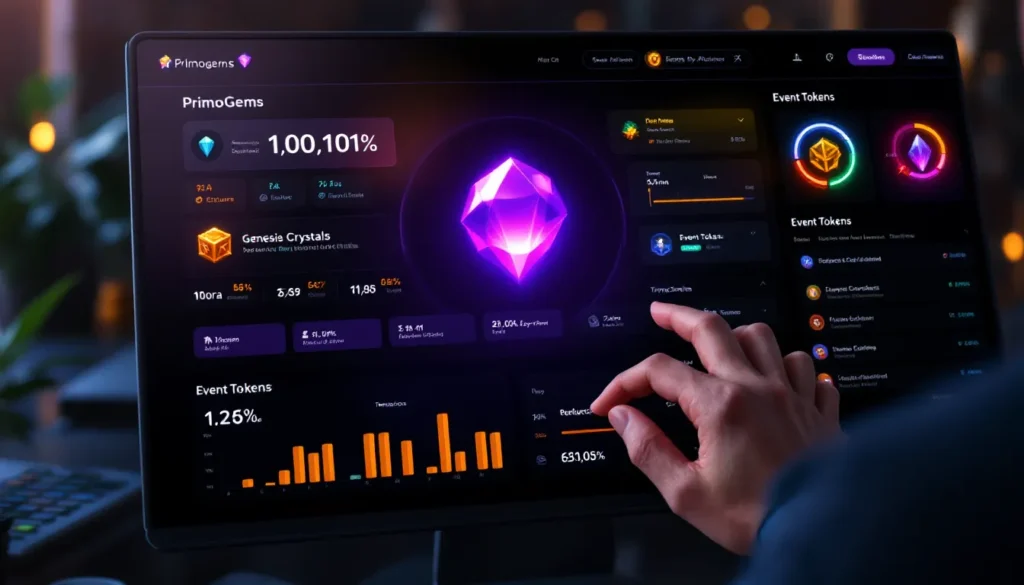
The core system breaks into two categories: premium currency (Primogems and Genesis Crystals) and in-game currency (Mora and event tokens). Primogems are the primary premium resource you earn in-game: Genesis Crystals are the premium currency tied to real-money purchases. Mora is the bread and butter of daily gameplay, you’ll spend it constantly on character ascension, weapon leveling, and talent upgrades.
Each currency serves a purpose, and mixing them up costs you real progress. A player who doesn’t know the difference between Primogems and Genesis Crystals might accidentally spend cash-only currency on something they could farm for free. That’s a mistake worth preventing.
As of patch 5.4 in 2026, the economy has stabilized somewhat after years of powercreep, but the fundamentals remain the same. The total amount of Primogems available each patch has remained relatively consistent, though pathways to earn them have evolved with newer features like the Spiral Abyss seasonal refreshes and various event structures.
Primogems: The Premium Currency Explained
Primogems are the lifeblood of pulling on banners (summoning for new characters and weapons). They’re earned through gameplay and can also be purchased with real money. The key thing every player needs to understand: pulling is expensive, and resource management makes or breaks your roster.
How to Earn Free Primogems
Free Primogems come from multiple sources, and maximizing them is how F2P and light-spenders remain competitive.
Daily Commissions deliver 60 Primogems every day when you complete four commission quests. That’s 1,800 Primogems monthly from a 5-minute task, this is non-negotiable. Missing even a week costs you significant currency.
Spiral Abyss is the main endgame activity, reset twice per patch. Clearing it fully grants 600 Primogems, split across 8 stages. Every other floor reset grants an additional 100 Primogems if you haven’t cleared it yet. For serious players, Spiral Abyss is where the real earning potential lies.
Event Quests are the variable earner. Each patch typically features 2–4 major events, each offering 200–500 Primogems depending on difficulty and length. Seasonal events around holidays can push even higher. Players who skip events leave serious Primogems on the table.
Exploration and World Quests grant one-time Primogem rewards. This includes opening chests, completing region quests, and discovery achievements. New regions add thousands of Primogems to the pool, but they’re consumed once, don’t expect them to refresh.
Abyss Leyline Anomalies (special Spiral Abyss variants) sometimes offer bonus Primogems beyond the standard reset rewards. Check the details each patch.
Welkin Moon subscription (the $5/month battle pass) grants 300 Primogems over its duration plus 90 more as a login bonus. It’s the single best value for light spenders.
A player clearing all sources, commissions, Abyss, events, and Welkin Moon, can expect roughly 8,000–10,000 Primogems per patch (about 42 days). Single limited banner pulls cost 160 Primogems: guaranteed 5-star pulls require 180 pulls, or 28,800 Primogems in the worst luck scenario.
Spending Primogems Wisely
Not all Primogem spending is created equal. The gacha system has hard pity (guaranteed 5-star) at 90 pulls, soft pity (increased rates) starting around 75 pulls, and 50/50 mechanics where you might lose to the standard 5-star. Understanding these odds shapes your strategy.
Character banners are where most players spend. New 5-star characters debut on limited banners, and pulling them requires planning. Meta shifts happen, a must-pull character one patch might be outclassed in the next. Don’t chase every new release: wait for reviews and tier lists before committing.
Weapon banners offer weapons but are mathematically worse value than character banners unless you’re specifically hunting a weapon for a well-built team. The epitomized path (weapon selector) requires 240 pulls maximum to guarantee a specific weapon, and weapons are less future-proof than characters.
Fate (conversion currency) is available through Primogem spending. Intertwined Fates go to limited banners: Acquaint Fates go to standard. Don’t convert Primogems to Fates separately, pull directly, it’s the same cost.
Standard banner pulling is a trap for new players. Yes, 5-star characters appear there, but they’re outdated versions compared to limited releases. Only pull standard if you’ve exhausted better options.
A solid strategy: save for 1–2 character banners per patch that align with your team needs. Skip weapon banners unless you’re prepared to go hard. Never pull to get ahead on pity unless you’re certain, bad luck exists, and resetting soft pity happens fast.
Mora: Your Primary In-Game Currency
Mora is the everyday currency, and you’ll spend it constantly. Unlike Primogems, Mora is purely farmable and doesn’t require spending real money. But, efficient Mora farming is the difference between a player with maxed characters and one stuck grinding materials.
Best Methods to Farm Mora
Mora Leyline Outcropping is the direct method: a special ley line dungeon that grants 30,000–40,000 Mora per run (depending on difficulty). It costs 20 Resin and takes about 3 minutes. At 160 Resin per day, you can run it 8 times, that’s roughly 250,000 Mora daily from Ley lines alone.
This is reliable but slow. Players with limited time often skip Ley lines for better Resin efficiency, since they also provide experience books.
Events often include Mora rewards as side loot. Domain events and mini-games frequently award 50,000–100,000 Mora bonus, on top of regular event rewards. During big patches (especially version launches), events can provide 300,000+ Mora passively.
Spiral Abyss gives 400,000 Mora for full clears, not for progressing, but as a completion bonus per reset. That’s a flat quarterly earner for players reaching high floors.
Daily Commissions include Mora as reward variation. Roughly 1,500 Mora per day from commissions, negligible but cumulative.
Overworld farming like defeating elite enemies and bosses grants Mora as drops, but it’s inefficient, use Resin-locked domains instead. Exception: if you’re farming materials anyway (ascension materials, talent books), grab the Mora drops.
The meta approach: spend Resin on Mora Ley lines only during off-weeks when domain drops aren’t urgent, or if you’re sitting on maxed Resin (waste prevention). Otherwise, farm materials and pick up incidental Mora.
Monthly Blessing rewards include 300,000 Mora if you claim all battle pass rewards (both free and paid tiers). This is a guaranteed earner if you complete your pass.
Managing Your Mora Reserves
Mora management becomes critical once you’re building multiple characters. A single 5-star character going 80→90 costs 414,225 Mora. All talent levels from 6→9 cost another 1,652,800 Mora. Leveling weapons multiplies this further.
New players should expect to spend 2–3 million Mora per patch as they build their roster. That’s 3–4 Ley line runs daily, or relying on events.
Pre-farm before new characters release. If you’re planning to pull a new 5-star, have 2–3 million Mora saved beforehand. Nothing kills momentum like pulling a character and waiting weeks to farm Mora for ascension.
Prioritize talent leveling on active DPS. A character’s talent is where damage scales. Leveling talents 6→9 gives roughly 30% damage increase, massive value. Supporters can stay lower.
Don’t level every character. This is the biggest Mora sink for new players. Build 4 characters for each Abyss team, then slow down. Once you have two solid teams, every new character can wait until Mora is abundant.
Use the Mora tracker in your journal. Genshin’s interface shows your total Mora, daily income, and weekly spending. Most players find they have more Mora than expected once they track it, perception often differs from reality.
Genesis Crystals and Battle Pass Currency
Genesis Crystals are real-money currency: they don’t convert to Primogems, and they’re not earned through gameplay. Understanding their purpose prevents accidental overspending.
Obtaining Genesis Crystals
Genesis Crystals are purchased through the shop using real money. Prices vary by region and payment method, but the standard US tier starts at $0.99 for 60 Crystals up to hundreds of dollars for bulk purchases. Unlike Primogems, you cannot earn Genesis Crystals in-game under any circumstance.
Crystal top-ups sometimes include bonuses. The first-time purchase of each tier gives a bonus (e.g., buy 300 Crystals, get 30 free). These bonuses appear once per tier in your account lifetime.
Genesis Crystals have limited direct uses:
- Blessing of the Welkin Moon: 300 Crystals, grants daily Primogem drops and a lump sum.
- Battle Pass: 10 Crystals (cheap), unlocks premium battle pass rewards.
- Conversion to Primogems: 1 Crystal = 1 Primogem conversion at terrible rates (you lose out vs. direct Primogem purchases).
Converting Genesis Crystals to Primogems is a trap. The conversion rate is always worse than buying Primogems directly. Only do it if you have excess Crystals leftover after buying Welkin Moon or Battle Pass.
Welkin Moon and Battle Pass Value
Welkin Moon is the best value for any money spent on Genshin. At $5/month, it grants:
- 300 Primogems over 30 days (10 per day login).
- 90 Primogems as the final bonus.
- Total: 390 Primogems for $5, equivalent to buying 450 Primogems directly ($7 worth).
For light spenders, Welkin is mandatory. It takes 3–4 patches of Welkin to save for a guaranteed 5-star pull, making it the most efficient pathway into collecting new characters.
Battle Pass costs 10 Genesis Crystals ($10 for the first tier, cheaper if you have leftovers). It grants:
- 680 Primogems total (across all 50 levels).
- 4 Intertwined Fates (640 Primogem value).
- Weapon blueprints, ascension materials, and mora.
- Total: roughly 1,320 Primogem value for $10 spent.
This is excellent value, but only if you reach level 50 (the midpoint where returns drop off). Casual players who don’t play weekly shouldn’t bother: hardcores should buy both tiers (free + premium).
Seasonal Battle Passes (Gnostic Chorus/Hymn variants) offer slightly more value with enhanced materials, but the currency math is identical. Only buy what you’ll finish.
Event Currencies and Limited-Time Tokens
Seasonal events introduce temporary currencies that expire after the event ends. These are where casual players often leave free pulls on the table.
Seasonal Event Currencies
Every major event introduces a unique currency earned through event quests or mini-games. Examples from recent patches include:
- Waterborne Coins (Summer event): earned by completing summer domain quests, convertible to Primogems, materials, and mora at the shop.
- Festive Tour Tokens: earned through festival mini-games, cashed in for event-exclusive furnishings and rewards.
- Expedition Supplies: earned on exploration events, traded for ascension materials and mora.
The critical rule: all event currency expires at the end of the event. Unused currency vanishes. This is harsh, but it keeps players engaged.
Genshin Impact players in the Genshin Impact Archives should prioritize event currencies immediately upon release. The currency shop usually offers the same materials available elsewhere, so don’t fomo-buy, check patch notes for what’s actually valuable.
Crafting Special Event Currency
Some events allow currency crafting or conversion. For instance, certain seasonal events let you exchange duplicate items for currency, or complete side objectives to unlock extra token rewards.
Farming guides from sites like Game8 break down optimal farming routes for event currency, showing which quests grant the most tokens per minute. This is especially important for limited-time events where RNG (randomness) affects drops.
Spending priorities within event shops typically follow this order:
- Primogems or Intertwined Fates (if available). This is rare: most seasonal events don’t offer them directly.
- Ascension materials for new/meta characters. If the event coincides with a new character release, the shop usually stocks their materials, grab them.
- Talent books matching your active team needs.
- Weapons or artifacts (lowest priority, these drop from regular domains).
Example: during a new character banner event, the seasonal shop stocks their ascension materials. Spending event currency there saves you weeks of domain farming. Wait until after the character’s kit is reviewed before buying, don’t commit to a character that might flop in meta.
Seasonal battle pass alternatives sometimes include event currency as a bonus source. Finishing the free battle pass tier grants extra tokens, so claiming rewards weekly is crucial.
Optimizing Your Currency Strategy
The gap between deliberate players and spenders-without-strategy is massive. Optimization starts with understanding your playstyle, then budgeting accordingly.
Priority Spending for New Players
New players (Travelers under Adventure Rank 30) face a critical decision: pull now or save? The answer depends on your roster.
Early-stage priority: Focus on pulling 4–5 star characters that cover different roles: a DPS (damage), a support, and a healer. You don’t need meta characters, you need coverage. Best Genshin Impact Characters guides can help identify strong budget options.
Look for characters with universal applications:
- Bennett (4-star): ATK buffer, off-healer, absurdly good for free.
- Fischl (4-star): off-field Electro DPS, trivializes early overworld.
- Barbara (4-star free starter): healer, doesn’t require pulling.
Newcomers should spend their first 20–30 pulls testing the gacha, then save. Don’t rush Primogem spending, early game gives massive Primogem rewards from exploration, and you don’t need meta characters until Spiral Abyss.
Welkin Moon timing: Buy Welkin once you’re confident you’ll play for a month. Starting Welkin at Adventure Rank 20 gives you 2–3 months of savings for your first pity.
Battle Pass: Skip until Adventure Rank 30, when Spiral Abyss unlocks. Then grab the free tier every patch: buy premium once you hit level 30+ consistently.
Mora management: Don’t stress early. Farm Ley lines casually: they’re not optimal Resin spending yet.
Advanced Currency Management Tips
High-investment players and Abyss runners optimize heavily.
Rotation planning: Map out 2–3 patches ahead. If you know a character you want releases in patch 5.6, save now. Don’t pull on patch 5.4 unless absolutely necessary.
Soft pity targeting: Once you understand soft pity (increased rates at ~75 pulls), track your pull count. Hit soft pity on reruns of characters you already have, then hard-reset on new releases. This stretches currency further, you’re gambling 15 pulls instead of 90.
Event currency ruthlessness: Set a deadline (3 days before event end) to spend all seasonal currency. Don’t leave a single token unused. Set a phone reminder.
Weapon banner discipline: Only pull weapons if you’re whaling (heavy spending) or specifically hunting a signature weapon for a new character. The 50/50 system and epitomized path make weapons a luxury item. Casual players should skip entirely.
Document your gacha history: Use the gacha history page to track your pulls, pity counter, and 50/50 status. Knowing you’re 60 pulls into soft pity vs. 20 pulls out shapes your entire monthly budget.
Players serious about Spiral Abyss should reference tier lists and meta guides to understand which new characters actually shift meta. A character that ranks high in exploration might flop in Abyss, don’t pull purely on general hype.
Spiral Abyss math: Full clears cost roughly 4,000–6,000 Primogems in reset cycles if you need new 5-star characters. If your roster is stable, you’re only spending on reruns. Budget 8,000–10,000 Primogems per patch as a baseline, with flexibility for big patches.
Resin efficiency: Mora and Primogem farming via Ley lines is low Resin value. Prioritize domain farming for materials, ascension books, and talent books, Mora comes as a side benefit. Only run dedicated Mora ley lines during slow weeks or if sitting at capped Resin.
One often-overlooked strategy: buy the cheap Welkin tier every patch, even if you skip the battle pass. Going from 8,000 to 8,390 Primogems monthly compounds over a year, that’s nearly 5,000 extra Primogems annually, equivalent to one extra guaranteed pull. For $5/month, it’s the no-brainer of Genshin spending.
Conclusion
Genshin Impact’s currency system rewards deliberate planning over impulsive spending. Whether you’re free-to-play or willing to invest, the principles remain identical: understand what each currency does, respect hard pity, and don’t waste event tokens.
The biggest takeaway: Primogems are the limiting resource. Everything else (Mora, event currency, weapon ascension) is farmable or renewable. Guard your Primogems like your account depends on it. Pick your character targets wisely, hit soft pity when possible, and save across patches. A player who pulls 2–3 characters per patch with planning outpaces someone chasing every release reactively.
As patch cycles continue through 2026, metas will shift, new characters will arrive, balance changes will ripple, and old favorites might get overlooked. Stay flexible with your budget. Don’t lock yourself into a character months ahead: wait for reviews. The economy is stable, but your priorities shouldn’t be.
Finally, enjoy the game. Currency optimization matters for Abyss pushes and roster building, but Genshin’s story, exploration, and casual play don’t require meta characters. Spend what feels right, skip what doesn’t, and remember that a massive portion of the game’s content is accessible to anyone willing to farm. Your Primogems are precious, spend them on experiences you’ll actually enjoy.