



Table of Contents
ToggleCelestia has been the mystery hanging over Genshin Impact since day one. It’s the floating island in the sky that you can see from almost anywhere in Teyvat, tantalizingly out of reach. For years, players have theorized, speculated, and dove deep into lore threads trying to piece together what Celestia actually is and why we can’t access it yet. As of 2026, Celestia remains one of the game’s biggest unanswered questions, but we’ve learned enough about its role in Teyvat’s story to separate confirmed lore from pure fan speculation. This guide breaks down everything we know about Celestia, from its cosmic origins to its influence on the world below, and what might finally unlock access to this heavenly realm.
Key Takeaways
- Celestia in Genshin Impact is a floating heavenly realm governing Teyvat through the Heavenly Principles, serving as the seat of divine authority where all major conflicts trace back to decisions made in that cosmic realm.
- The Heavenly Principles enforce absolute order by controlling Visions, selecting Archons, and erasing civilizations that defy them, as evidenced by the complete destruction and erasure of Khaenri’ah during the Cataclysm thousands of years ago.
- Celestia remains inaccessible as of 2026 due to intentional narrative design, with players unable to reach the floating island through flying, climbing, or normal gameplay mechanics until the Traveler achieves sufficient power and story progression.
- The Abyss Order represents Celestia’s opposing force, born from Khaenri’ah’s cursed people who now fight to destroy the Heavenly Principles’ tyrannical control over Teyvat’s reality.
- Your Traveler character’s origin and presence in Teyvat directly challenges Celestia’s cosmic design, positioning you to ultimately choose between serving the divine order or leading a rebellion to reshape the world’s fate.
- Fan theories suggest Celestia will become accessible after all seven nations complete their Archon quests, likely introducing revolutionary gameplay mechanics and a final confrontation that determines humanity’s place in Teyvat post-Celestia.
What Is Celestia in Genshin Impact?
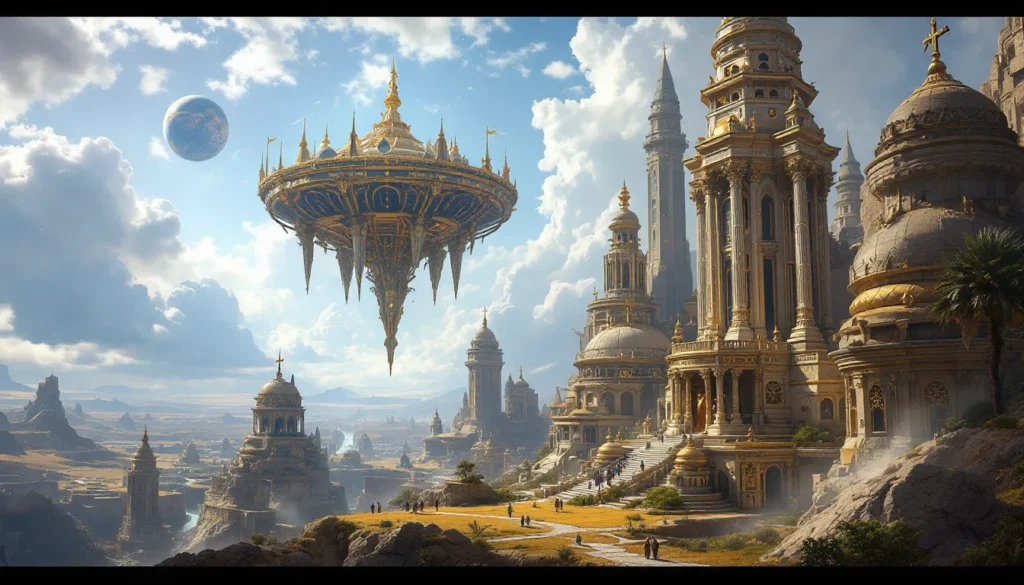
Celestia is a heavenly realm suspended above Teyvat, home to the gods and the Heavenly Principles, the cosmic force that governs all existence in the world. It’s not just a location: it’s the seat of divine authority. The island floats impossibly high above even the tallest mountains, visible as a shimmering expanse when you look at the sky from any nation.
At its core, Celestia exists as the physical manifestation of divine order. The gods answer to the Heavenly Principles, and from Celestia, they enforce the laws of reality itself. This isn’t a place where mortals simply walk in, accessing Celestia requires either divine ascension or an act that defies the very nature of the world’s design.
What makes Celestia central to Genshin’s narrative is its relationship to every major conflict in Teyvat. Wars, catastrophes, and the actions of archons all trace back to decisions made in that floating realm. The Abyss Order, for instance, wages war against the Heavenly Principles and everything Celestia represents. Understanding Celestia means understanding why your Traveler character has such an important role in the world’s fate.
The Lore Behind Celestia
The Gods and the Divine Throne
Celestia isn’t run like a typical government, there’s a strict hierarchy. At the top sit the Heavenly Principles, which operate more as cosmic laws than individual beings. Below them are the Seven Archons, each ruling over a nation in Teyvat. The Archons themselves are powerful gods, but even they answer to the Heavenly Principles.
Each Archon received their god’s eye and authority from Celestia as compensation for serving the Heavenly Principles. This is critical: being an archon isn’t about being the most powerful god in your region, it’s about being chosen by the Heavenly Principles to enforce their will. Varesa Genshin Impact: character choices in Teyvat highlight how even individual characters can challenge this order, but the archons themselves are bound by it.
The Heavenly Principles are abstract but omnipresent. They decide who gets a Vision, who becomes an Archon, and what’s allowed to exist in Teyvat. Anyone or anything that threatens their order gets eliminated or sealed away.
The Cataclysm and Celestia’s Role
Thousands of years before the current story, Teyvat experienced a catastrophic event called the Cataclysm. Entire civilizations were wiped out. The timeline is hazy, but one thing’s clear: Celestia and the Heavenly Principles had a direct hand in it.
The Khaenri’ah civilization, led by King Irmin, attempted to defy the Heavenly Principles. They didn’t want to bow to a distant cosmic force, they wanted autonomy. Celestia’s response was swift and absolute: the nation was destroyed. Its people were cursed to become the Abyss Order, twisted into immortal servants of destruction.
This wasn’t just warfare. This was erasure. Not only was Khaenri’ah destroyed, but it was erased from official records. The reason Genshin Impact Sigewinne introduces mysteries from the Fontaine arc is because characters like her have fragments of knowledge about what came before, knowledge Celestia tried to bury.
The Cataclysm shows that Celestia isn’t benevolent. It’s a force of absolute authority that crushes dissent. Every nation in Teyvat today exists only because they accepted the Heavenly Principles’ dominion.
Celestia’s Locations and Geography
Celestia is described as a floating island suspended above Teyvat, but what exactly does that mean geographically? The game doesn’t give precise coordinates, and for good reason, the realm exists partly outside normal space. You can see it from almost every region when you look skyward, a shimmering golden expanse against the sky.
Some fan cartography suggests Celestia hovers somewhere above the central regions of Teyvat, possibly aligned with the continent’s center. The Spiral Abyss, which is connected to the Abyss Order’s influence, exists in chasms beneath Teyvat, so Celestia above and the Abyss below form a cosmic balance.
The most concrete geography detail comes from the Archon quests: Celestia is described as having gardens, temples, and structures reflecting divine architecture. The Narukami Shrine in Inazuma contains architectural elements that mirror Celestian design, suggesting the Archons modeled their sacred spaces after Celestia.
One detail to note: Celestia might not be entirely untouchable. The Ley Lines that crisscross Teyvat are described as connections to a higher plane of reality, possibly Celestia itself. These aren’t just game mechanics: they’re lore-canon conduits of power that operate on principles we don’t fully understand yet.
How to Access Celestia in Genshin Impact
Current Accessibility Status
As of 2026, there is no way to access Celestia. Full stop. It’s not a hidden dungeon locked behind a puzzle, and it’s not gated by Adventure Rank or a specific quest line. The island exists in the game’s world, visible in the sky, but unreachable through normal gameplay mechanics.
MiHoYo has been intentional about this barrier. Flying high enough to touch Celestia doesn’t work, there’s an invisible wall that stops you. Climbing mountains to get closer yields the same result. Any attempt to interact with it triggers a barrier that redirects you back down.
This isn’t poor design: it’s narrative design. Celestia’s inaccessibility is the point. You’re not supposed to be there yet because your character hasn’t earned that right. The Traveler’s story is about ascending through ranks of power, and accessing Celestia represents the ultimate ascension.
Speculation on Future Access
The big question: when will Celestia become accessible? Fans have theories, and some have more weight than others.
The Endgame Theory: Many speculate that Celestia will be the final area added to Genshin Impact, arriving after all seven nations and their Archon quests are complete. This makes narrative sense, you can’t topple the Heavenly Principles until you’ve freed all the Archons from their control and gathered enough power.
The Rebellion Route: Another theory suggests the Traveler will lead a rebellion against the Heavenly Principles, with the final story arc being an assault on Celestia itself. This ties into the Abyss Order’s goals and would create a genuinely unprecedented moment in gaming, actually storming heaven.
The Timeline Issue: As of the Fontaine and Natlan arcs (2025-2026), the story is moving faster toward Celestia access. With Natlan’s story hinting at ancient history and divine conflicts, many players believe Celestia content is closer than ever.
What we know for certain: MiHoYo isn’t going to make Celestia trivial. When it opens, accessing it will require narrative justification, not just ‘we patched the wall away.’
Key Characters and Their Connection to Celestia
Several characters have direct ties to Celestia, and understanding their roles illuminates the realm’s influence on Teyvat’s story.
The Archons stand at the top. Venti, Zhongli, Raiden Shogun, and the others all received their authority from Celestia. Each has a complicated relationship with that authority, Zhongli negotiated his way out of Celestia to observe humanity, Venti acts carefree while harboring resentment toward divine control, and the Raiden Shogun became increasingly tyrannical in pursuit of eternity (a Celestian concept). Genshin Impact Eula exemplifies how characters resist archon control in their own way, showing that the archons’ authority isn’t absolute.
The Traveler is the linchpin. Your character was cast into Teyvat from another world by an unknown force, and hints throughout the story suggest the Traveler’s presence directly challenged Celestia’s design for the world. Lumine/Aether’s unknown sibling is possibly working with or against Celestia, we still don’t know which.
Sustainer of Heavenly Principles is perhaps the most mysterious. This entity appeared at the end of the Liyue arc and severely weakened the Traveler, demonstrating that Celestia has direct agents capable of intervening in Teyvat. Genshin Impact Characters Male archetypes show divine influence trickling down even to regular people who receive Visions.
Dain (Dainsleif), the Bough Keeper, has extensive knowledge of pre-Cataclysm history and Celestia’s crimes against Khaenri’ah. He’s positioned as the character most likely to guide players toward rebelling against the Heavenly Principles.
Nahida, the Dendro Archon, broke her connection to Celestia in meaningful ways, using the Akasha terminal to elevate all people’s consciousness instead of maintaining divine hierarchy. She’s proof that Archons can defy Celestia, at least in subtle ways.
The pattern is clear: every significant character has either submitted to Celestia’s order, rebelled against it, or exists in the complicated space between obedience and defiance.
The Heavenly Principles and the Abyss Order
The Abyss Order exists as Celestia’s perfect foil. Where Celestia represents cosmic order enforced through absolute authority, the Abyss represents chaos and rebellion. Understanding their conflict is key to understanding Celestia’s role in Teyvat’s future.
The Heavenly Principles created the world but also created the Abyss as a dumping ground for anything that threatened their design. When Khaenri’ah refused to submit, its people were cursed and sealed in the Abyss, transformed into immortal servants twisted by despair and rage. This isn’t a random dungeon full of monsters, the Abyss is a prison and a weapon.
The Abyss Order’s Goal: They want to destroy Celestia’s influence entirely. They’re not trying to replace the Heavenly Principles with something better, they’re trying to shatter the system itself. Some members have become corrupted to the point where they’re barely human anymore, while others like the Archons and some Fatui remain partially sane, nursing grand ambitions.
What’s fascinating is that the Abyss Order might be right about some things. Celestia’s track record includes genocide, mind control through Visions, and erasing civilizations from history. The Abyss Order’s methods are abhorrent, but their grievance is legitimate.
The Twin Archons Theory: This ties directly into the Traveler’s role. Your character’s sibling is revealed to work with or for forces related to the Abyss (or at least, that’s the implication). This suggests the Traveler will eventually have to choose between following Celestia’s order or joining forces with Khaenri’ah’s remnants to tear it down.
Recent lore from Game Rant’s gaming guides on narrative progression suggests the final conflict in Genshin won’t be a traditional good-versus-evil story. It’ll be a choice between imperfect systems: the tyrannical order of Celestia or the destructive chaos of the Abyss. The Traveler will have to decide which world is worth fighting for.
Celestia’s Influence on Teyvat’s Story
Every major event in Teyvat’s past and present connects to Celestia in ways both obvious and hidden. The realm’s influence extends far beyond the floating island itself.
Visions as Control Mechanisms: The most direct influence is through Visions. Every Vision-bearer is, on some level, an agent of the Heavenly Principles. Celestia decides who gets a Vision, when they get it, and theoretically, it can revoke that power. This makes every Vision-bearer, including your party members, agents of Celestia’s will, whether they know it or not. Exploring this concept further, Best Genshin Impact Characters showcases how Vision-bearers shape Teyvat through their individual choices while still bound by Celestian destiny.
Divine Intervention in Wars: The cataclysm 500 years ago, the fall of Khaenri’ah, and even recent conflicts like the Raiden Shogun’s totalitarian reign can all be traced back to Celestia’s influence. The Heavenly Principles don’t just set rules, they actively shape history.
The Ley Lines and Reality Itself: Ley Lines are described as manifestations of the world’s will, but deeper lore suggests they’re Celestia’s infrastructure. Every time you farm Ley Line materials, you’re interacting with Celestia’s direct influence over Teyvat’s reality.
Forbidden Knowledge: Entire regions and civilizations have been destroyed because they uncovered knowledge about Celestia or the Heavenly Principles. The Abyss Order exists partly because Khaenri’ah learned too much. This pattern repeats, knowledge is censored, history is rewritten, and anyone too curious gets eliminated.
The Fatui’s Game: Even the Fatui, even though being portrayed as villains, seem to be playing against Celestia’s interests. The Tsaritsa’s plan to collect all the Gnoses (each Archon’s connection to Celestia) suggests a coordinated effort to sever Teyvat’s ties to the Heavenly Principles. Whether that’s heroic or catastrophic depends on your perspective.
Celestia isn’t a passive backdrop, it’s an active, malevolent force shaping every aspect of Teyvat’s story. The deeper players jump into Genshin’s lore, the more they realize that the conflict with the Abyss Order is just one front in a much larger war against the Heavenly Principles themselves.
What Fans Expect From Celestia Content
The gaming community has had years to theorize about what Celestia will offer when it finally becomes accessible. Expectations are sky-high (literally), and they break down into a few categories.
Gameplay Expectations: Players expect Celestia to have exploration, puzzles, and new enemy types unlike anything seen before. The current exploration meta in Genshin relies on climbing, gliding, and solving environmental puzzles, Celestia might introduce new mechanics entirely. Some fans predict zero-gravity sections or puzzle types requiring multiple Vision types simultaneously. Tier lists and meta guides like those on Pocket Tactics mobile gaming coverage suggest players are prepared for Celestia to completely shift the endgame experience.
Story Expectations: The final confrontation with the Heavenly Principles is coming. Players expect:
- The Traveler making a choice that determines the ending (cooperation or rebellion)
- Major character deaths or transformations
- The truth about the Traveler’s origin and why they were cast into Teyvat
- The fate of the other Traveler (Lumine/Aether’s sibling)
- What happens to the Archons once Celestia’s influence is challenged
Loot Expectations: Obviously, players expect exclusive weapons, artifacts, and characters tied to Celestian lore. A Celestian 5-star DPS or support character would be huge, and artifact sets with Celestian-tier power levels are anticipated.
The Timeline: Many believe Celestia content will drop sometime in 2026-2027, likely during a major version like 5.5 or 6.0. The Natlan arc’s narrative momentum suggests the story is accelerating toward a confrontation, not stalling.
The Wildcard: Some players theorize that accessing Celestia won’t be a traditional content update. Instead, it could be a permanent world state change where Celestia simply becomes visitable after a certain story threshold. Imagine logging in after a major Archon quest and suddenly seeing Celestia accessible on your map. That’s the kind of moment Genshin’s community is hungry for.
What’s clear is that Celestia content represents the endgame. Once it’s released, the nature of Genshin Impact itself will change, no longer will players be climbing toward something just out of reach. The ultimate question, what does humanity’s place in Teyvat look like after Celestia falls?, will finally demand an answer.
Conclusion
Celestia is the gravitational center of Genshin Impact’s narrative universe. From the Heavenly Principles that define reality itself to the Archons who enforce divine law to the Abyss Order that wages war against it all, everything in Teyvat traces back to that floating island. The realm represents both order and tyranny, cosmic authority and divine overreach.
As a player, your character’s journey in Genshin is fundamentally a path toward Celestia, whether to serve it, challenge it, or destroy it remains the ultimate unanswered question. The lore threads are converging, the Archon quests are building momentum, and the Fatui’s long game is starting to click into focus. Celestia won’t remain inaccessible forever.
When that final confrontation comes, it won’t just be another story arc. It’ll be the moment players determine Teyvat’s future. Until then, keep looking at the sky, that shimmering expanse above the world is waiting, and the secrets it holds will reshape everything you thought you knew about Genshin Impact.