



Table of Contents
ToggleFlints might sound like a small detail in Genshin Impact, but they’re actually a critical ascension material that’ll hold back your progression if you ignore them. Whether you’re pushing characters to level 90 or maxing out weapon ascensions, flints become a bottleneck faster than you’d expect. This guide covers everything you need to know about farming flints efficiently, understanding where they fit into your upgrade pipeline, and whether active farming is worth your time in 2026. We’ll break down the exact locations, the best routes, and the realistic value of spending resin on flint domains versus other priorities.
Key Takeaways
- Genshin Impact flints are critical ascension materials from Inazuma that become a progression bottleneck when ignored, with uses in weapon ascension, character ascension, and talent level-ups requiring 15 flints per item at max capacity.
- The most efficient flint farming strategy combines two weekly Electro Hypostasis boss runs (80 resin for 4-6 flints) with daily open-world Narukami Island loops (zero resin cost for 3-4 flints), netting 15-20 flints weekly without excessive grind.
- Flints drop exclusively from Electro enemies in Inazuma, with the Electro Hypostasis boss providing the best resin-to-flint ratio (2-3 flints per 40 resin run) compared to the lower spawn density of scattered Electro Slimes.
- Active flint farming should only be prioritized if you’re building multiple Inazuma characters simultaneously or pushing characters to level 90 with maxed talents; passive daily farming covers most casual players’ needs.
- Flints don’t participate in any trading system, making efficient routing and strategic resin allocation essential rather than relying on conversions or NPC trades.
- Maintain a 30-50 flint reserve for sustainable progression without dead inventory weight, allowing flexibility to adapt to upcoming Inazuma character releases and team compositions.
What Are Flints In Genshin Impact?
Flints are a specialty enhancement material primarily sourced from Inazuma. They’re used for ascending specific weapons and characters, particularly those tied to Inazuma’s regional themes. Unlike more universal materials, flints have a narrower pool of users, which affects their farming priority relative to, say, Volcanic Stone Fragments or Coral Branches.
Flints drop from Electro enemies in Inazuma, specifically from Electro Slimes and Electro Hypostasis enemies. When you defeat these enemies, they’ll occasionally drop flints, usually in groups of 1-3, depending on enemy level and world rarity. The Electro Hypostasis boss in particular tends to be more generous with drops compared to random Electro Slimes scattered across the map.
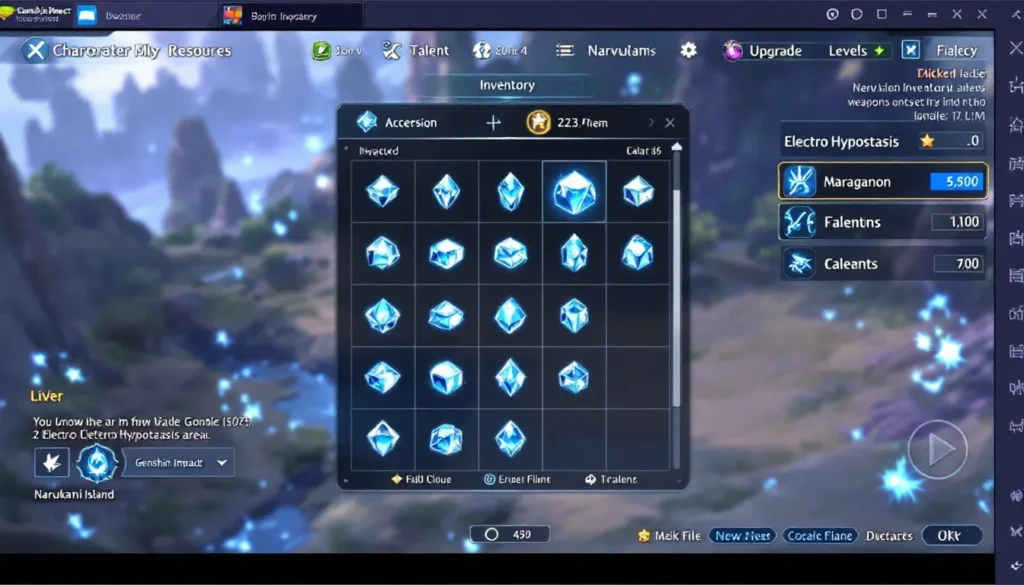
The material looks like a small, crystalline shard with an electro-blue tint. In your inventory, you’ll find flints grouped under “Enhancement Materials.” The drop rate isn’t guaranteed, so you’ll need multiple runs or sustained farming to build up a meaningful stockpile. This is where farming routes become essential: rather than hunting random Electro Slimes, dedicated routes let you optimize your run time and enemy count per session.
Primary Uses For Flints
Flints serve three main purposes in your progression: weapon ascension, character ascension, and talent level-ups. Understanding which characters and weapons actually need flints helps you decide whether to farm them aggressively or bank on world drops.
Weapon Ascension Requirements
Several Inazuma-themed weapons require flints for ascension. Weapons like the Amenoma Kageuchi, Hakurei Ring, and Katsuragikiri Nagamasa all call for flints as part of their ascension chain. If you’re building an Inazuma weapon-focused team, flints become essential. Each weapon needs a total of 15 flints to max ascend, spread across ascension phases 2–4. That sounds manageable, but when you’re ascending three or four weapons simultaneously, you’re looking at 45–60 flints needed quickly.
Character Ascension Needs
Several five-star and four-star characters from Inazuma use flints for ascension. Genshin Impact Sigewinne: Uncover and characters like Ayaka, Yae Miko, and Fischl require flints for their ascension phases. Again, each character needs 15 flints total spread across ascension levels 2–4. If you’re leveling multiple Inazuma characters, flint demand skyrockets.
Talent Level-Up Materials
Character talent books also call for flints as supplementary materials. When you’re pushing talents to level 9 or 10, the cost includes not just talent books but also flints. For high-investment characters, you might need 5–10 additional flints just for the final talent levels. It’s a smaller requirement per character, but across your entire roster, it adds up.
Best Flint Farming Locations
Flints drop exclusively from Electro enemies in Inazuma. There’s no domain-specific grinding, no ley line blossoms, and no weekly bosses that guarantee flints. Your farming strategy comes down to efficient routing through enemy-dense areas.
Inazuma Domains & Routes
Electro domains aren’t your focus here, open-world enemies are the real flint source. There’s no dedicated flint domain like some other materials. Instead, you’re hunting Electro Slimes and the Electro Hypostasis scattered across Inazuma’s islands. The Electro Hypostasis boss arena in Narukami Island is your most reliable flint drop, guaranteeing 2–3 flints per fight. If you have resin to spare, one or two runs here guarantees a solid batch.
For consistency without boss resin, focus on the densest Electro Slime clusters. The area around Serpent Spine and Fort Momiji in the eastern regions of Narukami Island spawn multiple Electro Slimes within walking distance. The advantage: these areas respawn daily and don’t cost resin. You can chain 3–4 slimes together in a 5-minute loop, netting 3–4 flints per run with good luck.
Open World Flint Spawns
Narukami Island is your primary flint farming hub. The island’s design naturally clusters Electro enemies, making it ideal for farming routes. Specifically, routes starting near the Momiji Dyed Court waypoint and looping clockwise past Fort Momiji hit 4–5 Electro Slimes per run. With respawn timers, you can run this route once daily without resin cost.
Watatsumi Island also has scattered Electro Slimes, but the spawn density is lower. Unless you’re already in the area for other materials, Narukami routes are more time-efficient. If you want raw numbers, the Electro Hypostasis domain fight (costs 40 resin) yields 2–3 flints guaranteed, making it the most efficient resin-to-flint ratio in the game. Run it two or three times weekly, combine with daily open-world loops, and you’ll steadily build your stockpile.
Efficient Farming Strategies
Efficient flint farming isn’t just about knowing where they spawn, it’s about timing, team composition, and weekly resin allocation.
Daily & Weekly Routes
The optimal weekly flint plan looks like this: Dedicate 80 resin (two runs) to the Electro Hypostasis boss twice weekly. This guarantees 4–6 flints with minimal time investment. On the remaining five days, run the open-world Narukami loop once daily (3–5 minutes) for 3–4 flints per day. Over a week, this nets roughly 15–20 flints with just two resin commitments.
This strategy works because it balances resin efficiency with daily engagement. The Hypostasis runs are quick, under 2 minutes with the right team, so the resin cost feels manageable. The daily loops require zero resin, so they’re pure bonus farming. Combine both approaches and you’re hitting ascension material benchmarks without treating flint farming as a chore.
Pro tip: Farm flints during your natural gameplay loops. If you’re already in Inazuma for other reasons, tag the nearby Electro Slimes. Don’t dedicate separate sessions solely to flint hunting unless you’re in a time crunch.
Character & Team Recommendations
Bringing the right team dramatically speeds up flint runs. For the Electro Hypostasis, bring strong Cryo or Hydro DPS characters, Electro is weak to these elements. Characters like Genshin Impact Eula: Unleash provide consistent cryo damage and high DPS output against the boss. Fischl or Raiden Shogun as sub-DPS can also work if you’re using physical carry setups.
For open-world Electro Slimes, any strong DPS works. They’re low-HP enemies, so raw damage matters more than element matchups. The key is team speed: fast-hitting characters like Ayaka or Genshin Impact Lyney: Uncover clear slimes in seconds. Bring a healer or shielder if you want to autopilot, or skip healing entirely and just tank the small damage flint farms cause.
Recommended loadout for Electro Hypostasis:
- Main DPS: Ayaka, Shenhe, or any strong Cryo carry
- Sub-DPS: Fischl, Raiden, or Kazuha for elemental support
- Healer: Barbara, Bennett, or any reliable healer
- Flex: Second DPS or Pyro applicator
This comp guarantees a clean two-minute kill, making weekly resin runs feel fast and painless.
Flint Value & Trading Systems
Flints don’t participate in Genshin’s item trading system, there’s no way to convert them into other materials or trade them directly with NPCs. What you farm is what you get, which makes efficient routing even more important.
Relative to other enhancement materials, flints sit in an interesting spot. They’re less universally useful than Coral Branches (needed by tons of Fontaine characters) or Volcanic Stone (for many Natlan characters), but more valuable than niche materials only a handful of characters use. The sweet spot is having 30–50 flints banked at any given time. This covers most ascension needs without sitting on dead inventory weight.
Comparing resin efficiency: The Electro Hypostasis (40 resin) yields 2–3 flints per run. By contrast, ley line blossoms cost 20 resin and yield significant mora or character xp. From a pure resin-to-material-value standpoint, you’re trading resin at a slightly lower rate for flints than you would for other core materials. This is why flints work best as a secondary farm, get them during natural gameplay rather than forcing dedicated resin commits.
If you’re actively pursuing character or weapon ascensions that require flints, the resin investment feels justified. If you’re casually building and flints aren’t blocking progress, let daily loops passively stock your supplies. This flexibility makes flint farming more forgiving than other material bottlenecks.
Should You Farm Flints Actively?
Active flint farming (dedicating resin specifically to flint grinding) only makes sense in specific scenarios. Here’s how to decide.
Farm flints actively if:
- You’re building multiple Inazuma characters or weapons simultaneously
- You’re pushing specific characters to 90 and maxing their talents
- You have resin to spare after handling priority farms (talent books, ascension domains)
- You’re prepping for upcoming Inazuma character releases
Skip active farming if:
- Your core roster is already built: you only use flints for niche character builds
- Your resin priority is talent leveling or ascending newer characters
- You’re satisfied with passive daily loop gains (usually 15–20 flints weekly)
In practice, most players fall into the second category. Inazuma characters are strong but not mandatory. Passive daily farming covers most needs, and forcing extra resin runs yields diminishing returns in terms of real progression speed. The difference between 40 flints and 60 flints is maybe two extra character ascensions, meaningful but not game-changing.
That said, if you’re optimizing for resource efficiency, two weekly Hypostasis runs (80 resin total) combined with daily loops is the sweet spot. It’s low-friction, sustainable, and nets enough flints to keep ascension projects moving without feeling like a grind. Recent game guides on farming strategies show that this balanced approach outperforms all-in farming for long-term progression satisfaction.
Conclusion
Flints are a solid enhancement material that’ll inevitably block your progression if you completely ignore them, but they’re not worth stressing over. The beauty of flint farming is its flexibility: daily open-world loops cost zero resin and passively build stockpiles, while weekly boss runs provide quick injections when you need a push. This dual-path approach means you can adapt to your actual needs rather than grinding obsessively.
The key takeaway: don’t farm flints in isolation. Treat them as a secondary material that you grab during natural gameplay and supplement with light weekly commitment. This keeps your farming efficient, your resin spending reasonable, and your progression steady. As meta shifts and new Inazuma characters release, your flint reserves will thank you for building that safety net early. For deeper character insights across regions, exploring character builds will round out your team composition knowledge and help you prioritize which ascensions matter most to your playstyle.